Homeschool Room Ideas: Creating a Space Where Learning Happens
By Nick & Amanda | Updated September 2026
One of the most exciting parts of starting homeschooling is setting up your space. And one of the most paralyzing. Pinterest boards full of beautiful dedicated schoolrooms with custom built-ins, chalkboard walls, and perfectly organized libraries can make a family with a kitchen table and a bookshelf feel hopelessly inadequate.
Here’s the truth we’ve learned after 13 years: the most beautiful homeschool rooms are not always the most effective. And the most effective homeschool rooms are not always the most beautiful.
What makes a homeschool room work has nothing to do with aesthetics and everything to do with function. Here’s how to create a space — whatever space you have — where real learning happens.
First — You Don’t Need a Dedicated Room
We’ve said this before and we’ll say it again because it bears repeating: you do not need a dedicated homeschool room to homeschool effectively.
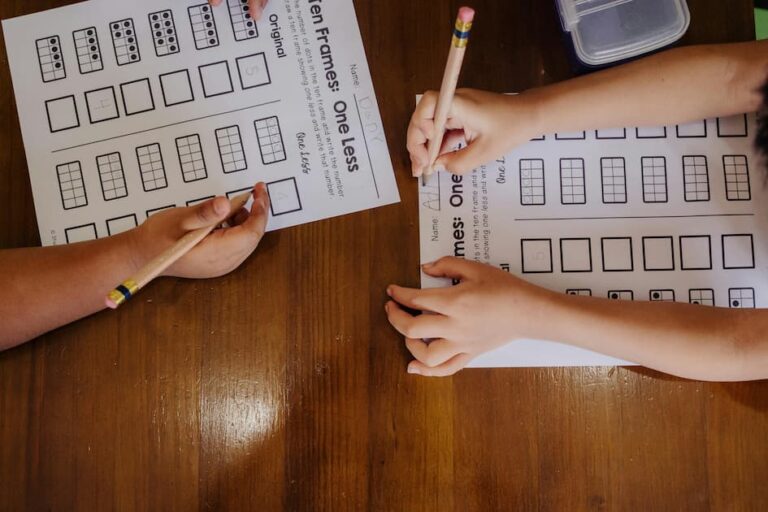
Many of the most successful homeschool families we know school at the kitchen table, on the living room floor, in the backyard, at the library, and in coffee shops. The space matters far less than the consistency and intention you bring to it.
That said — if you do have a dedicated space or are creating one — here’s how to make it exceptional.
Read our complete guide: How to Set Up Your Homeschool Space
Homeschool Room Ideas by Space Type
The Dedicated Schoolroom
If you have a spare room to dedicate entirely to homeschooling you have the most flexible canvas to work with. Here’s how to make the most of it:
Layout ideas:
The Traditional Setup:
- A large table in the center — big enough for all your children to work simultaneously
- Individual desks along one wall for focused independent work
- Teacher’s area — a smaller desk or standing area where you can see all students
- Bookshelves along every available wall
- A whiteboard or chalkboard on one wall
- A bulletin board for displaying work and reference materials
The Learning Stations Setup:
- Different areas of the room dedicated to different types of learning
- A reading nook — comfortable seating, good lighting, bookshelves within reach
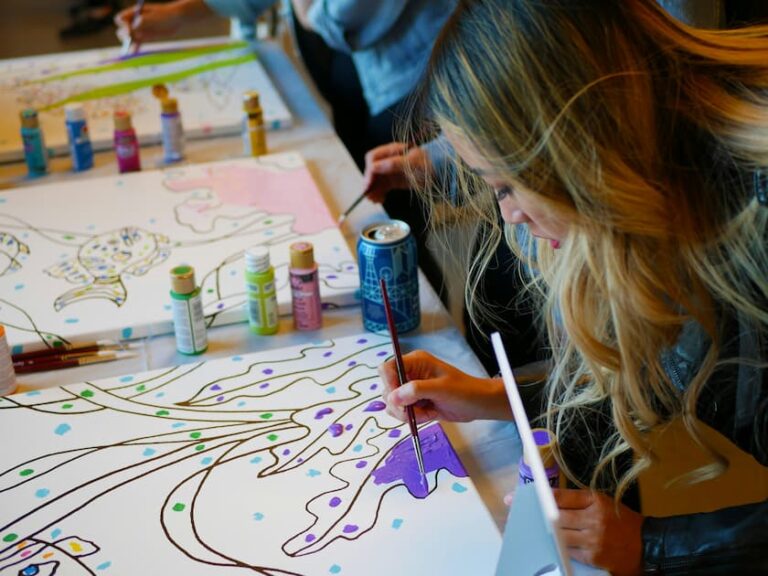
- A creating station — art supplies, building materials, hands-on project area
- A technology station — computer or tablet for online resources
- A quiet work area — individual desks for focused independent work
- A morning meeting area — rug or comfortable seating for group instruction
The Charlotte Mason Setup:
- Minimal furniture — open floor space for movement and projects
- Nature table — a dedicated surface for nature specimens, seasonal items, and nature journals
- Art supplies easily accessible
- Bookshelves filled with living books
- A comfortable reading area
- Large windows — natural light is essential in a Charlotte Mason environment
Essential elements for any dedicated schoolroom:
Abundant bookshelves: Homeschool families accumulate books at a remarkable rate. Plan for more shelf space than you think you need — then add more. Books within reach are books that get read.
Want a complete guide to building your homeschool book collection? Read: How to Build a Homeschool Library →
Good lighting: Natural light is ideal — position work areas near windows. Supplement with good quality overhead lighting and individual desk lamps. Eye strain from poor lighting is a real problem for children who spend significant time reading and writing.
Accessible storage: Everything your children need should be within their reach — not stored in closets or high shelves that require adult assistance. Open shelving, labeled bins, and accessible drawers reduce the friction of getting started with work.
Wall space: A dedicated schoolroom needs significant wall space for:
- Whiteboard or chalkboard — for math instruction, spelling practice, and brainstorming
- Bulletin board — for displaying student work, posting schedules, and reference materials
- Maps — world map, US map, historical maps relevant to your current unit
- Timeline — if you’re using a chronological history approach
- Alphabet and phonics charts — for early learners
- Math reference charts — multiplication tables, measurement conversions
The Converted Space
Not everyone has a spare room — but many families find creative ways to convert existing spaces:
Basement schoolroom: Finished basements make excellent schoolrooms — separate from the main living area which reduces distractions, large enough for multiple learning stations, easy to contain the mess of active learning. Add good lighting — basements are often dark — and make sure the space is temperature controlled.
Garage conversion: A finished or insulated garage provides significant square footage for a schoolroom. More involved to set up than a spare room but produces a genuinely functional dedicated learning space.
Dining room conversion: If your family primarily eats in the kitchen the formal dining room may rarely be used for dining. Converting it to a schoolroom gives you a dedicated space without losing a room you actually use.
Attic conversion: A finished attic can make a charming and private schoolroom — especially for older students who benefit from separation from household activity. Ensure adequate insulation and temperature control.
Closet conversion: A large walk-in closet can be converted into a focused study nook — especially for an older student who needs quiet concentrated work space. Remove the closet doors, add a desk and shelving, ensure good lighting.
Homeschool Room Ideas for Small Spaces
Not everyone has a spare room or the ability to convert a space. Here’s how to create effective homeschool environments in small homes:
The Kitchen Table Schoolroom
The kitchen table is the heart of many excellent homeschools. Here’s how to make it work:
- Command the space during school hours — establish a clear school time when the table belongs to learning
- A rolling cart for curriculum — stores beside a wall when not in use, rolls to the table at school time
- Individual bins for each child — each child’s current workbooks and supplies in their own labeled bin
- A small bookshelf nearby — for reference books and read-alouds within easy reach
- Clear the table after school — the physical transition from school to home signals the end of the school day
The Living Room Schoolroom
Many families do morning basket and read-alouds in the living room — taking advantage of comfortable seating and natural gathering space:
- A basket or bin for morning basket materials — read-alouds, poetry books, memory work, nature journals
- A small bookshelf or basket of books — accessible for independent reading
- Floor time encouraged — children can sit, lie, or move during read-alouds
- A lap desk for each child — allows writing and drawing while seated on the floor or couch
The Floating Schoolroom
Some families — particularly those with older children — have no fixed schoolroom at all. School happens wherever it happens:
- Each child has a backpack or tote with their current curriculum
- School moves between kitchen table, library, coffee shop, and outdoors
- A shared digital drive stores reference materials and assignments
- The flexibility itself becomes the structure
Furniture and Storage Ideas
Tables:
IKEA Lack table: Affordable, sturdy, available in multiple sizes. Many families use two or three pushed together for a large work surface.
IKEA Linnmon/Adils: Customizable table top and leg combination — choose your size and configure for your space.
Farmhouse dining table: A large farmhouse table provides generous work surface for multiple children simultaneously and looks beautiful in a dedicated schoolroom.
Individual student desks: Useful for older students who need focused independent work space. Avoid for young children who learn better at a shared table with parental presence nearby.
Seating:
Standard chairs: Simple and functional. Match the table height.
Wobble stools: Allow movement while seated — excellent for children who fidget or have ADHD. Several children in our homeschool community swear by these.
Exercise balls: Some children focus better seated on an exercise ball — the subtle movement engages their proprioceptive system.
Floor cushions and bean bags: For reading areas and morning basket time. Comfortable and inviting.
Standing desk option: Some older students work better standing. An adjustable height desk or a simple riser on a regular desk creates a standing work option.
Storage:
IKEA Kallax shelving: The homeschool community’s favorite storage solution. Cube shelving with optional bins and doors — versatile, affordable, and attractive. Use cubes for bins of curriculum, art supplies, and materials.
IKEA Trofast: Specifically designed for children’s storage — low shelving with colorful bins. Excellent for elementary age children’s materials.
IKEA Billy bookcase: The classic bookshelf — affordable, sturdy, and available in multiple heights and widths. A wall of Billy bookcases holds an enormous book collection.
Rolling carts: The IKEA Råskog cart and similar rolling carts are popular in homeschool rooms for art supplies, science materials, and curriculum storage. Roll them where needed, store them out of the way.
Clear bins with labels: For art supplies, science materials, and small manipulatives. Clear bins allow children to see contents without searching. Labels make cleanup straightforward.
Magazine files: For workbooks and loose curriculum materials — keep subjects organized and upright on shelves.
Reading Nook Ideas
A dedicated reading nook is one of the most valuable additions to any homeschool space — and one of the most beloved by children. A space that is specifically for reading signals that reading is special and valued.
Simple reading nook ideas:
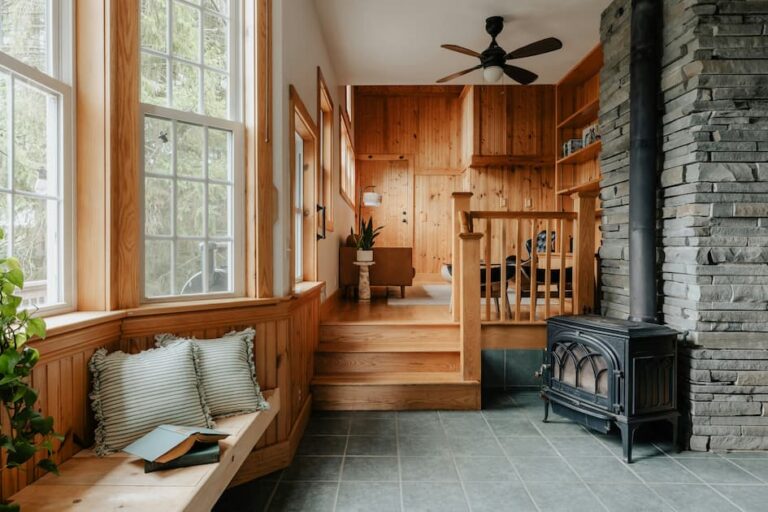
The window seat: If you have a bay window or deep window sill a cushion, some pillows, and a nearby bookshelf create an instant reading nook. Natural light and a view make it irresistible.
The closet nook: Remove the doors from a small closet, add a cushion and some shelves for books, hang fairy lights — instant cozy reading cave. Children love enclosed spaces for reading.
The teepee or canopy: A simple fabric teepee or canopy over a cushion and some pillows creates a magical reading space at minimal cost. Especially beloved by younger children.
The beanbag corner: A large beanbag or floor cushion with a nearby bookshelf and good lighting. Simple and effective.
The under-stairs nook: If you have space under a staircase it can be converted into a charming reading nook with cushions, shelves, and lighting.
Nature Table Ideas
A nature table — popularized by Charlotte Mason homeschoolers — is a dedicated surface for displaying and exploring natural objects. It brings the outside world into your learning environment and changes with the seasons.
What goes on a nature table:
- Seasonal items — leaves, acorns, pinecones, flowers, seeds
- Specimens from nature walks — interesting rocks, shells, feathers, bark
- Living plants — a small plant or herb growing in a pot
- Nature books — field guides and nature identification books nearby
- Nature journals — for sketching and recording observations
- Magnifying glasses and microscopes for closer examination
A simple nature table: Any surface can be a nature table — a small table, a shelf, a windowsill. The key is dedicating it specifically to natural objects and keeping it current with what’s happening in nature right now.
Art Supply Organization
Art supplies are one of the most challenging storage problems in a homeschool room — there are many items in many sizes that need to be accessible without creating chaos.
Art supply storage ideas:
Clear bins by type: Colored pencils in one bin, markers in another, watercolors in another. Clear bins allow children to find what they need without dumping everything out.
Rotating carousel: A desktop rotating carousel holds pencils, pens, scissors, and markers within easy reach from multiple angles.
Rolling cart: A dedicated art supply cart that rolls to the work area when needed and stores against a wall when not in use.
Pegboard: A pegboard wall with hooks holds art supplies visually and accessibly. Particularly useful for larger items.
Individual art boxes: Each child has their own art supply box — reduces conflict over shared supplies and makes cleanup individual responsibility.
Wall Decor Ideas for Homeschool Rooms
The walls of a homeschool room can be functional, beautiful, or both:
Functional wall elements:
- World map and US map — essential reference and geography tools
- Multiplication table — for quick reference during math
- Alphabet and phonics charts — for early learners
- Timeline — running chronological history timeline updated as you study
- Current unit study display — key vocabulary, images, and concepts from your current topic
- Student work display — rotating gallery of your children’s best work
Beautiful wall elements:
- Framed prints of artwork you’re studying — art appreciation without the museum
- Inspirational quotes — educational philosophy, family values, favorite literary quotes
- Botanical prints — beautiful and educational
- Vintage maps — decorative and historically interesting
- Children’s artwork — framed and displayed with pride
Technology Setup
For middle and high school students particularly a good technology setup becomes increasingly important:
Computer or laptop: Essential by middle school. A dedicated school computer — not shared with family entertainment — helps establish the academic purpose of the space.
Monitor: A larger monitor reduces eye strain for extended work sessions. An external monitor connected to a laptop gives a desktop-like experience at reasonable cost.
Printer: You will print more than you expect. A reliable all-in-one printer with scanning capability is worth the investment. Budget for ink — it costs more than you expect.
Headphones: For audio programs, online courses, and focused work in shared spaces. Noise-canceling headphones are worth the investment for easily distracted learners.
Budget-Friendly Homeschool Room Ideas
You don’t need to spend a lot of money to create an effective and beautiful homeschool room:
Thrift stores and Facebook Marketplace: Bookshelves, desks, storage bins, and furniture at a fraction of retail prices. Homeschool families frequently sell or donate items that work perfectly for your space.
IKEA: The most affordable source for functional homeschool furniture — Billy bookcases, Kallax shelving, Trofast storage, and basic tables are homeschool staples for good reason.
Dollar stores: Pencils, erasers, composition notebooks, index cards, and basic art supplies at minimal cost. Storage bins, baskets, and organizational items at a fraction of specialty store prices.
DIY projects: A plank of wood across two Kallax units makes a generous desk. Pegboard from a hardware store creates an inexpensive art supply wall. Chalkboard paint on one wall creates a functional and beautiful writing surface.
What to splurge on:
- Good lighting — eye strain is real and prevents learning
- Comfortable seating — children who are physically comfortable focus better
- Quality bookshelves — they’ll hold hundreds of books for years
Our Homeschool Room Over 13 Years
Our homeschool space has looked completely different at different stages of our journey.
In our early years — kitchen table with a rolling cart of curriculum and a bookshelf in the corner. Functional and completely adequate.
As our curriculum grew and our children got older we converted a spare bedroom — a large table in the center, bookshelves on every wall, a whiteboard, and a bulletin board.
Now with middle and high schoolers our approach has evolved again. Our older students do significant independent work in their own rooms. Our shared space is used primarily for morning basket and the subjects we still do together.
The lesson: your homeschool room will evolve as your children grow. Don’t over-invest in any one setup. Stay flexible.
Frequently Asked Questions About Homeschool Room Ideas
Do I need a dedicated homeschool room? No — many successful homeschool families never have a dedicated homeschool room. Kitchen tables, living room couches, backyard picnic tables, and library desks all work perfectly well. What matters is having a consistent place where learning happens — not a room with a chalkboard and desks. That said a dedicated space can reduce setup and cleanup time significantly for families who have the square footage.
How do I set up a homeschool room on a budget? The most budget-friendly homeschool room setup focuses on a few essentials — a large whiteboard, adequate bookshelves, good lighting, and comfortable seating. Thrift stores, Facebook Marketplace, and IKEA are your best sources for affordable homeschool furniture. A $50 whiteboard and $30 worth of IKEA Billy bookshelves can create a functional homeschool space for under $100.
What do I need in a homeschool room? The essentials for a functional homeschool room are a large writing surface — whiteboard or chalkboard, a dedicated bookshelf for current curriculum, good natural or artificial lighting, comfortable seating appropriate for your child’s age, and a flat work surface large enough for projects and writing. Everything else — globe, maps, art supplies, manipulatives — is supplemental.
How do I organize a small homeschool room? Small homeschool spaces work best with vertical storage — tall bookshelves, wall-mounted shelving, and pegboards maximize limited square footage. Use labeled bins and baskets to keep curriculum organized by subject or child. A rolling cart that tucks away when not in use is invaluable in small spaces. Digitize what you can — PDFs and ebooks take no physical space.
What furniture do I need for a homeschool room? The most important homeschool furniture pieces are a large table or desk with enough surface area for multiple children to work simultaneously, bookshelves with enough capacity for your current curriculum plus library books, and comfortable seating — chairs, floor cushions, or a couch for read-alouds. Flexible seating options — wobble stools, exercise balls, floor cushions — benefit kinesthetic learners significantly.
How do I set up a homeschool room for multiple ages? Multi-age homeschool rooms work best with designated spaces for each child — even if that’s just a labeled shelf and a specific seat. A shared table for group instruction and individual work areas for independent work accommodates multiple ages simultaneously. Store each child’s current curriculum in their own labeled bin or cart so materials are always accessible and organized.
What should I put on homeschool room walls? The most functional homeschool wall displays are a large whiteboard or chalkboard for instruction, a world map and US map for geography reference, a timeline for history, an alphabet and number line for elementary students, and a weekly schedule so children know what to expect each day. Avoid covering every wall with educational posters — visual clutter overwhelms many learners.
How do I organize homeschool supplies? The most effective homeschool supply organization system uses labeled bins or baskets by subject — one for math manipulatives, one for art supplies, one for science materials. Keep daily-use supplies accessible at the work surface and store less-used materials in closed storage. Do a quarterly purge of unused curriculum and supplies to prevent accumulation.
What is the best homeschool room setup for a child with sensory processing differences? Sensory-friendly homeschool rooms minimize visual clutter, use natural lighting or warm LED bulbs rather than fluorescent lights, include flexible seating options, and provide a calm corner with minimal stimulation for regulation breaks. Read our complete guide: [How to Homeschool a Child with Sensory Processing Differences →](your URL)
Can I homeschool without a separate room? Absolutely — the kitchen table is the most common homeschool space in America and produces extraordinary results. The key is having a consistent routine, organized storage nearby, and a clear signal for when school time begins and ends. Many families use a rolling cart that comes out at school time and tucks away afterward — creating a school space without dedicating a room.
Head to our Start Here page for everything you need to homeschool with confidence.
And grab our free First Year Homeschool Checklist below — everything you need to get started in one simple download.